How Retractable Roofing Handles Heavy Rain and High Winds: An Engineering Breakdown
TL;DR: An angled edge prevents rain building up on the awning and a retractable option allows flexibility with changing weather. Permanent structures like pergolas offer style but less function.
Table of Contents
Retractable awnings are a popular choice for outdoor areas right next to a house because they provide shade and shelter when you want it but can be retracted when you don’t need them. By contrast, if you work with traditional pergola installers to build a permanent structure through which plants can be trained to provide shade when in leaf, you are at the mercy of nature in a different way.
Pergola vs Retractable Awning
Those plants on the pergola will give a bit of relief from the sun as long as the leaves are there to do a deflecting job, and if there is a lot of growth there will be quite a lot of shade, but with a light covering you’re going to get dappled sunshine, which may or may not be what you want.
A pergola may have the benefits of a kind of country atmosphere, but when it starts to rain, you’re going to get no protection even in a light shower, while if the weather turns bad, not only will you get blown about and drenched, but that natural growth could be ruined long-term.
A pergola, then, is a natural option that has good points – appearance and charm – but a disadvantage in that it does not retract, and even when it’s in full leaf, it’s only like being under a tree in terms of shelter.
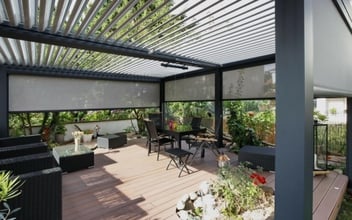
Modern engineered options like retractable pergolas and awnings, on the other hand, offer complete flexibility. The shelter is significantly stronger, and understanding how retractable roofs compare to adjustable louvre systems helps homeowners choose the right level of rain sealing and airflow control.
How an Awning Does its Job: The Elementary Science
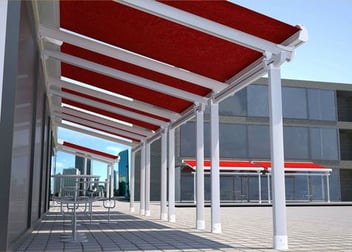
An awning is a barrier against what comes from above, which is to say rain. But it can’t be horizontal, because then it would quickly become a pond. A slight angle is called for, then, so that the water runs down and off. The slope is and always has been a handy tool for roofers.
As for what the awning is made from, you need a waterproof material, or at least a water-resistant one so it can allow the rain to run off, rather than soaking into the fabric. But do you want a thick, tough sheet of plastic or do you want something that will allow a bit of light through to help the ambience? There are options, including the very different proposition that is an aluminium motorised louvre roof for rigid, all-weather durability.
Some manufacturers will provide attractive but relatively delicate fabrics but strongly recommend you keep them dry – in which case you need to be able to respond to the weather quickly.
When the Awning Needs to be out of the Way
The technology of retracting a bit of roofing in this way used to be little more than a long handle that you had to spin by hand - and you will still find these now, but automation is the 21st-century way. Just as you can dim lighting and draw curtains by remote control, modern motorisation lets you adjust overhead cover at the touch of a button. It can even be done automatically by wind and rain sensors if you have the budget. Getting back to the permanent and natural options, no traditional pergola can be operated in this way.
So, all in all, if you want dependable shade and all-season weather protection, installing dedicated retractable roofing is the way to go. To explore mechanisms, fabric ratings, and wind thresholds in detail, check out the ultimate guide to retractable roofing systems to determine the best fit for your home.